






Favo MD4820
Opis
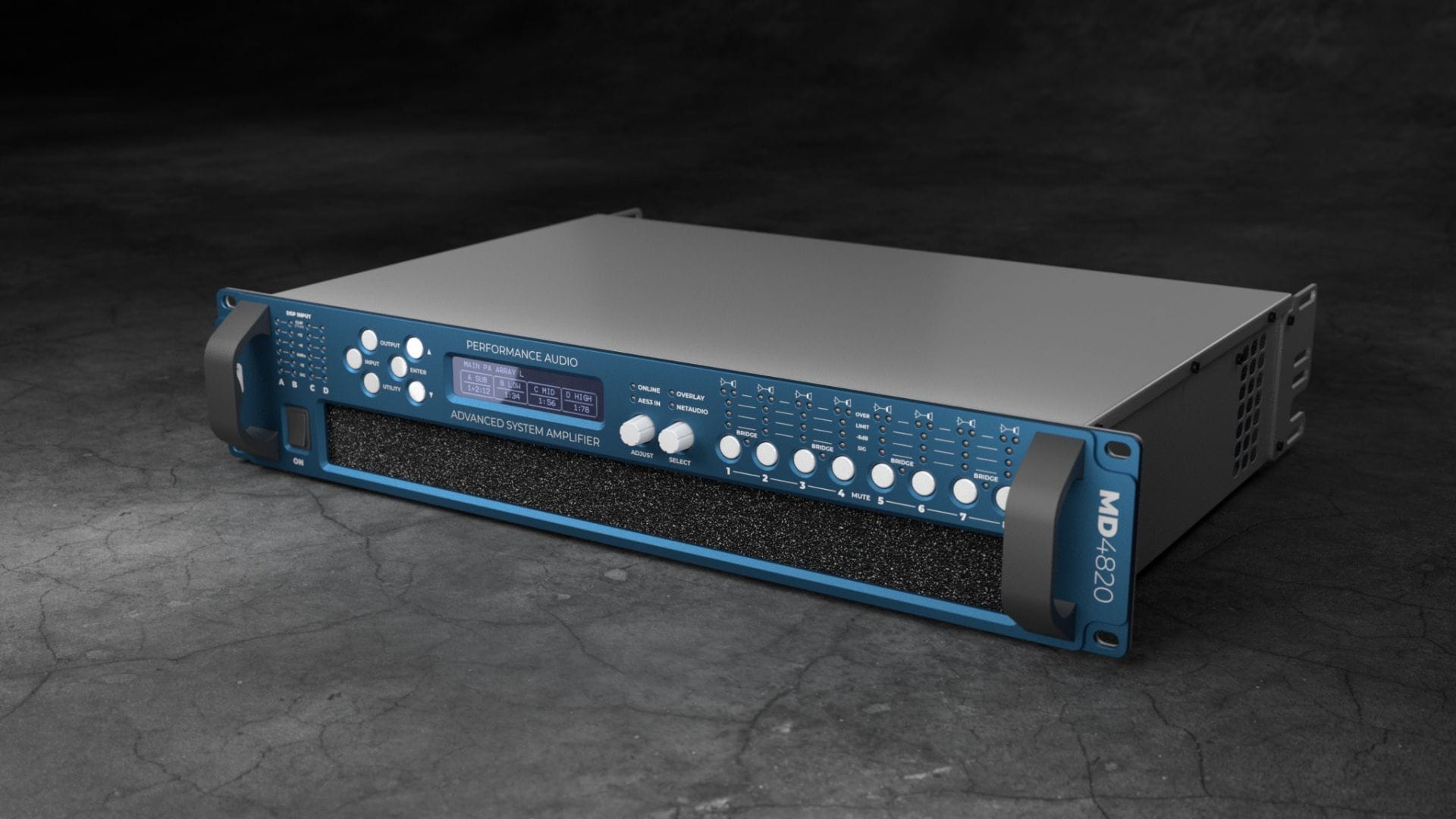
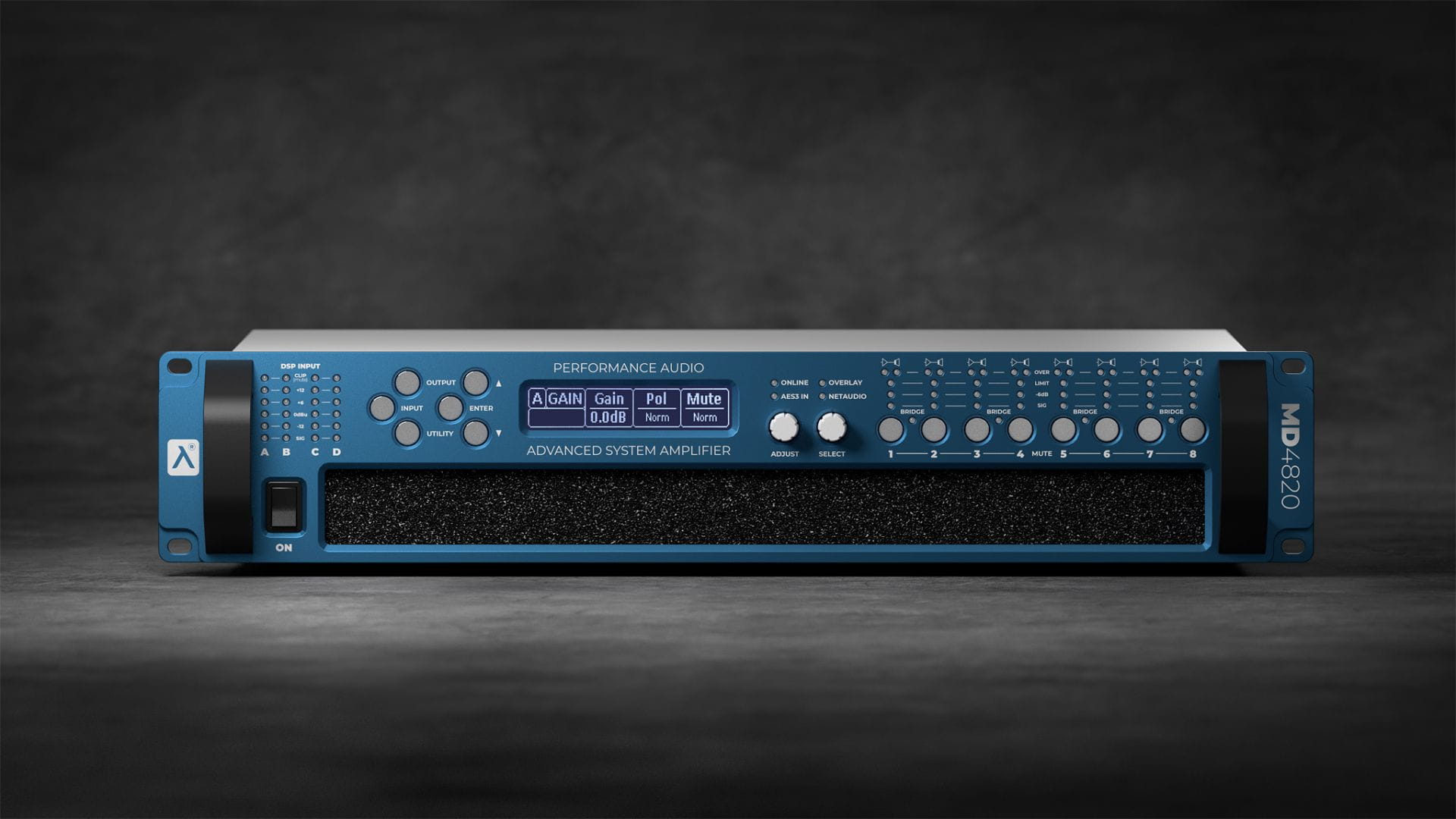
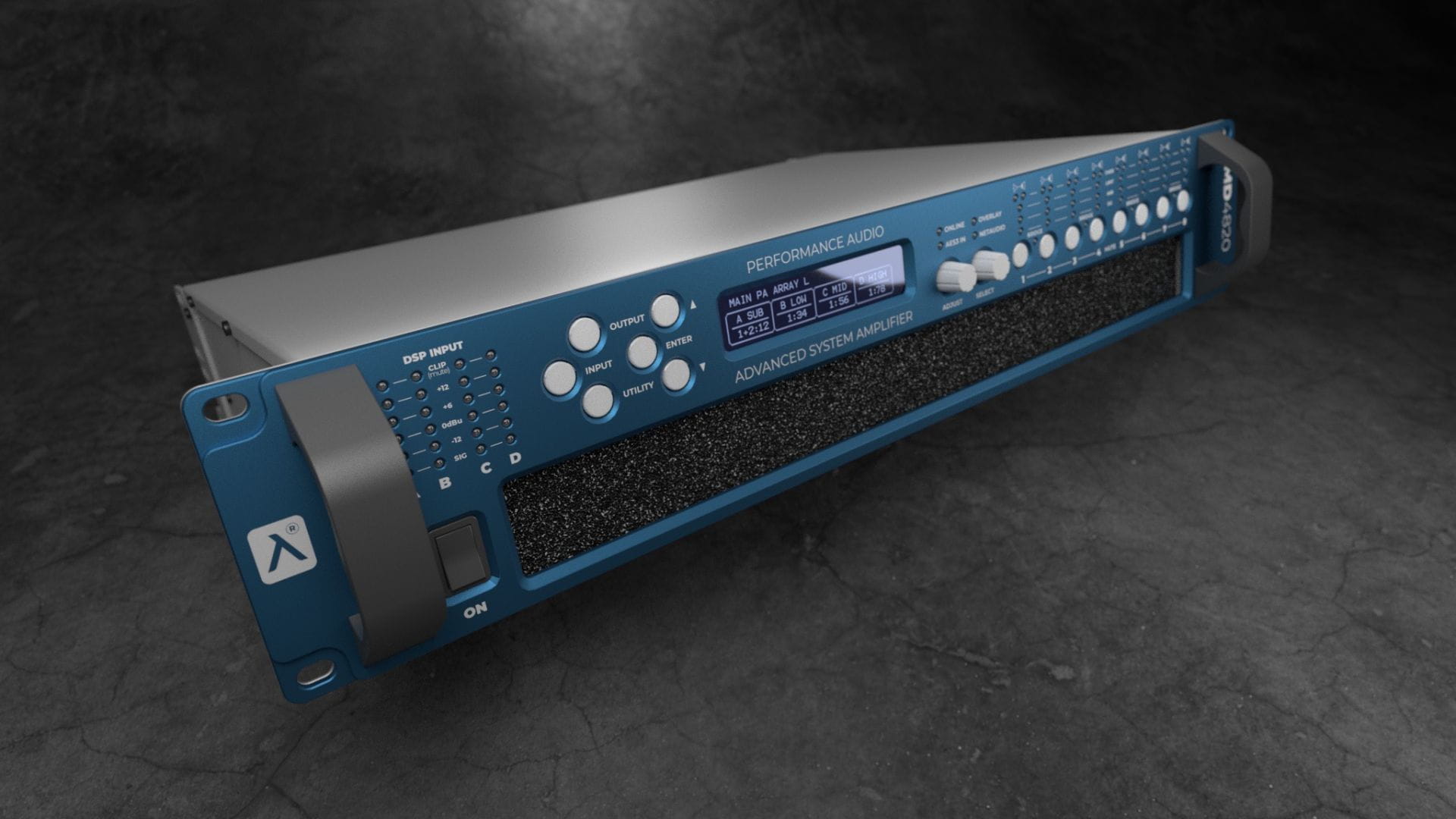
Four inputs and eight outputs with integrated DSP. 20,000 watts.
KEY FACTS ABOUT THE MD48 SERIES:
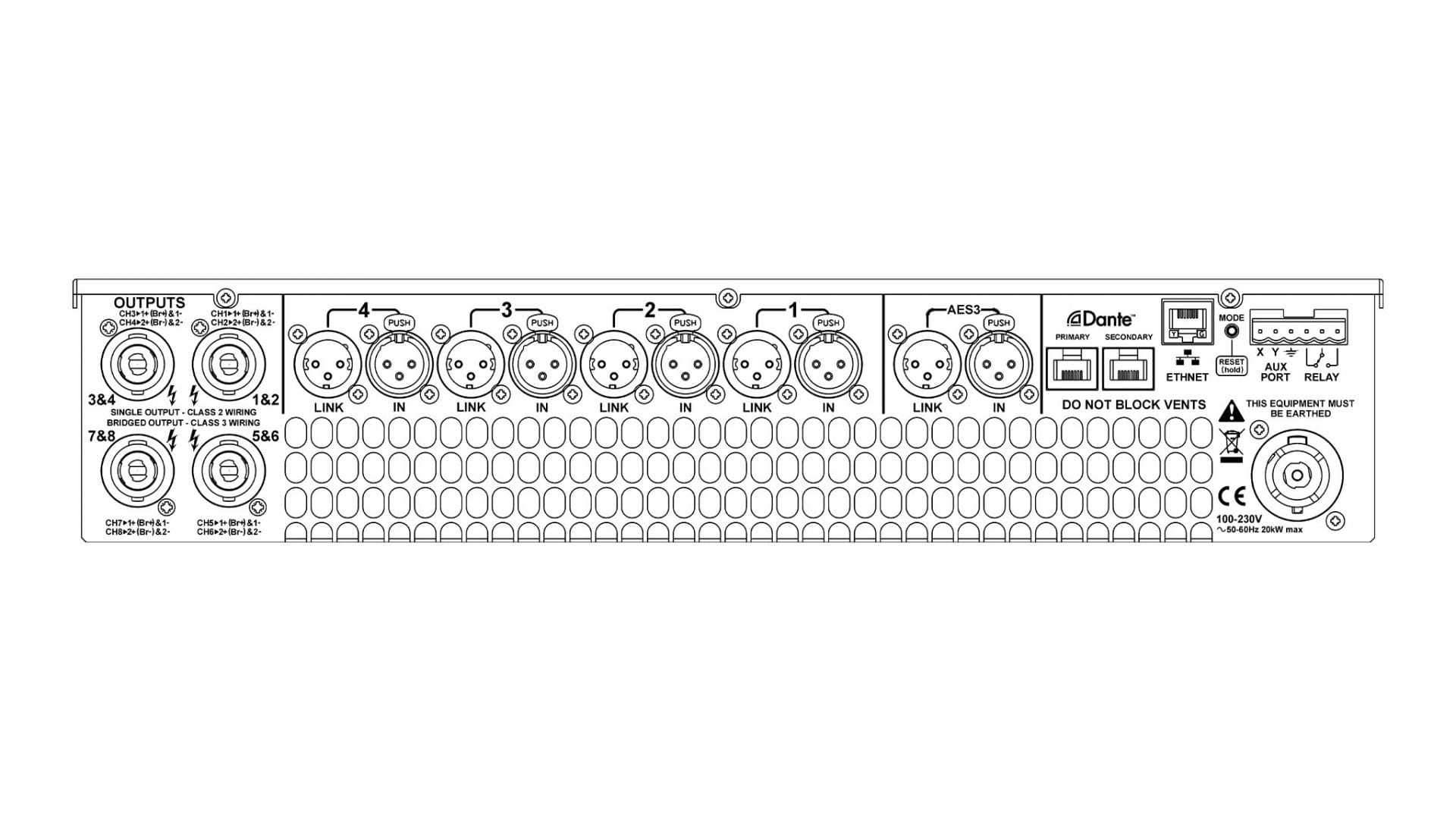
- Four analog and AES3 digital inputs and a Dante matrix (optional).
- Class-leading power stages with state-of-the-art semiconductor technology.
- 96kHz DSP processor with unique parameters (IIR, LIR and FIR linear-phase filters).
- Simple front-panel operation. Full parameter control and the ability to load presets.
- Dual power supplies - independent for amplifiers and DSP. Energy-saving sleep modes.
- Software module grouping with multi-layer EQ and simple control of complex systems.
- "Wake on audio" function - the amplifier will wake up from "standby" mode when it senses a signal at the input.
WHAT ELSE IS WORTH KNOWING ABOUT THE MD48 SERIES:
- Four channels of excellent Class D amplification.
- 20,000 watts RMS with fully loaded power stages.
- Operation 85V to 240V auto switching power supply.
- Monitoring and control via Ethernet.
- Analog, AES3 and optional Dante™ / AES67 inputs. Open to external Audio/Video interfaces of the future (AVB, Milan).
- Accepts 48kHz and 96kHz FIR files via System Engineer application.
- Developed, designed and manufactured in the UK by Linea Research.
The MD48 Series is designed for use at festivals, tours, clubs and all Live/Touring events.
It offers a unique combination of massive, sustained power delivery, advanced DSP processing, and Ethernet control. The MD4820 amplifiers deliver 2500 watts per channel.
The power supply, designed with a huge margin, will deliver full power all the time, with a load of up to 2 Ohms and a dense, uniform signal on each channel, all with the highest possible efficiency (details below).
The MD4820 series is a quantum leap forward in audio technology.
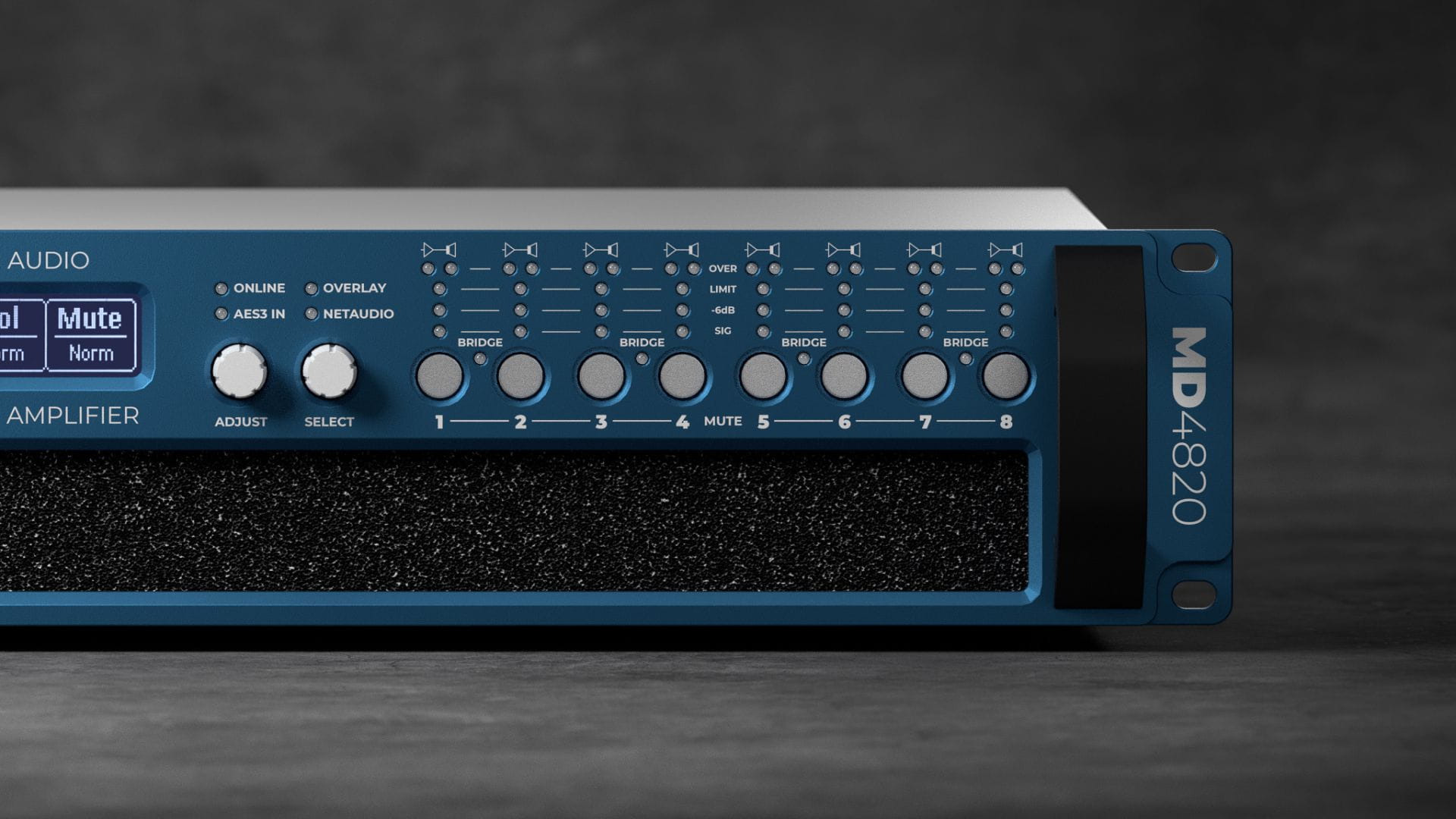
The MD48 series shares the same features and size as the four-channel MD44 model , but can deliver 2500 watts to each of its eight channels (up to 5000 watts per pair in bridged mode). We're not talking about transient, peak, or burst power, but pure RMS power delivered by all channels simultaneously, even under parallel loads with the densest audio material. With our amplifiers, you don't have to worry about channel power distribution or power sharing. This has been repeatedly confirmed in dozens of installations and live situations worldwide, as well as independent tests (e.g., www.Production-Partner.de).
You can use everything you paid for, all the time.
How does it work? Linea Research devices achieve this because their 5th generation Class D amplifiers have been redesigned for maximum efficiency, eliminating unnecessary loss- and noise-generating components. The topology and physical layout of the components enable 7% to 10% higher efficiency than competing products. This efficiency translates directly into higher power output over time, without generating heat, which is crucial. This approach, in addition to stable operation in the harshest conditions, also results in pristine sound and a noise ratio of 113 dBA from analog input to amplifier output—an achievement without peer (or at least, we don't know of any examples).
Each channel can deliver maximum power under 2, 4 and 8 ohm loads, but also on 25V, 75V and 100V DC lines. This solution allows designers a high degree of flexibility in installations.
You don't need to use external software and file exports.
The 96kHz DSP integrated into the amplifier is essentially a series of Sharc and ARM chips programmed entirely by the Linea Research team. This resulted in the development of unique, unmatched LIR (Linear Phase IIR) crossovers. These are as easy to use as those you're used to, yet don't affect phase and have a lower inherent delay than complex FIR filters. There's no need to use external software or export files. Set up the crossover and you can instantly verify the filter's performance without group delay! The VX limiting algorithms are also unique, allowing for different limiting in different frequency ranges within a single channel, as well as RMS, Peak, and overexcursion limiters.
Convenient, transparent operation.
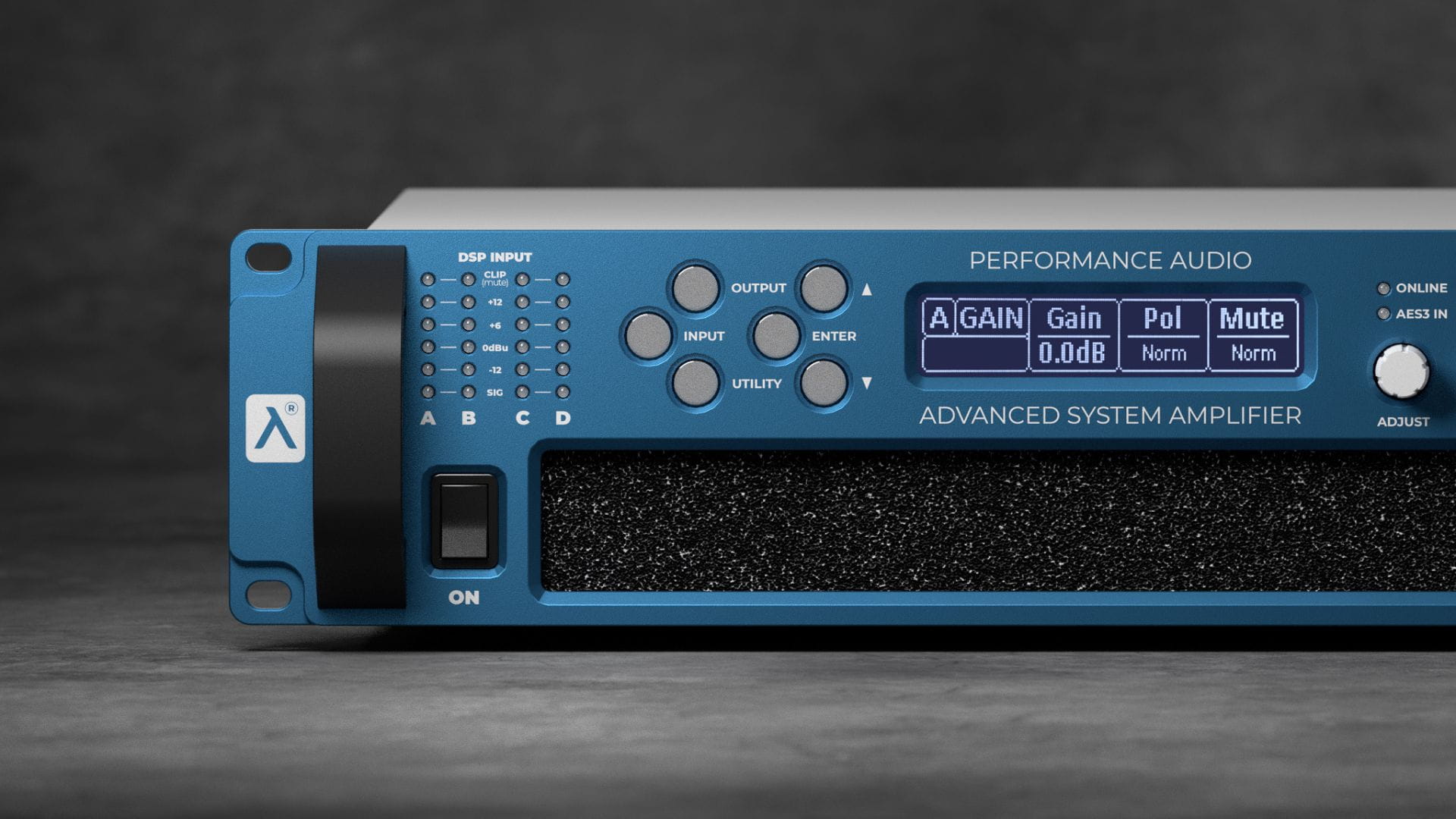
For communication, we use Ethernet ports, which are independent of the Dante inputs and outputs, and the System Engineer application on a PC (Mac users must use VMWare or Parallels). The front panel displays all key information, such as system stability and audio levels, but it lacks switches to prevent unskilled operators from making mistakes. The device's memory can store a range of settings and so-called "snapshot" scenes, familiar from modern mixing consoles. Snapshots can be changed via an analog output and a simple contact switch, making this task suitable for anyone, even the most inexperienced.
Dedicated, intuitive System Engineer software.
Working with System Engineer is intuitive, and the interface is graphically clear. The application offers many convenient and time-saving features for managing presets, layering mutes, gains, delays, and, of course, EQ across the entire system (not just within a single amplifier). Control via third-party devices is also possible via TCP/IP, RS232, and RS485 protocols.

